Reps Forge Ahead with Bill to Cultivate Agricultural Innovation in Rural Nigeria

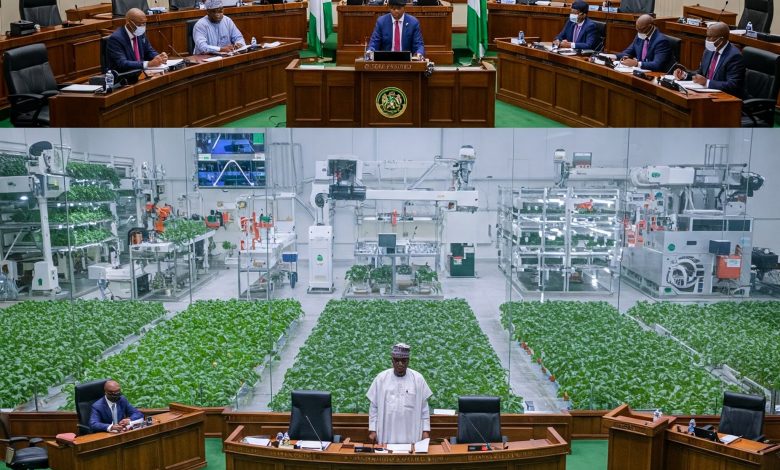
Abuja, Nigeria – The House of Representatives has taken a significant step towards bolstering agricultural innovation and productivity in Nigeria’s rural heartlands. Yesterday, the legislative body passed for second reading a Bill aimed at expanding the mandate of the Agricultural Research Council of Nigeria (ARCN). The proposed legislation seeks to establish specialized training institutions across the federation, with the overarching goal of deepening national agricultural productivity capacity and fostering innovation beyond urban centers.
The Bill, aptly titled a “Bill for an Act to Amend the Agricultural Research Council of Nigeria Act, Cap. A12, Laws of the Federation of Nigeria, 2004, to Provide for the Establishment of Certain Specialised Colleges; and for Other Related Matters,” is spearheaded by Deputy Speaker, Benjamin Kalu.
Comprising three principal clauses, the Bill primarily focuses on amending the Third Schedule of the existing Act to pave the way for the establishment of the following specialized colleges of agriculture in strategic locations across the country:
- Federal College of Veterinary and Medical Laboratory Technology, Bende, Abia State;
- Federal College of Land Resources Technology, Takum, Adamawa State;
- Federal College of Land Resources Technology, Ikole Ekiti, Ekiti State;
- Federal College of Freshwater Fisheries Technology, Ikot Ekpene, Akwa Ibom State;
- Federal College of Animal Health and Production Technology, Dange Shuni, Sokoto State; and
- Federal College of Animal Health and Production Technology, Olamaboro, Kogi State.
Leading the debate on the fundamental principles underpinning the Bill, Deputy Speaker Benjamin Kalu emphasized the enduring and vital role of agriculture within the Nigerian economy. He highlighted its significance as a key driver for rural development, a crucial engine for job creation, a cornerstone of national food security, and a substantial contributor to the nation’s Gross Domestic Product (GDP).
The Deputy Speaker pointed out the persistent and evident gaps in agricultural research and innovation, particularly within regions possessing unique agricultural potential that remains largely untapped due to the absence of tailored educational institutions designed to address specific local needs.
According to Kalu, this Bill is strategically designed to bridge this critical gap. He asserted that the proposed amendment transcends the mere addition of institutions; rather, it represents a crucial investment in unlocking latent potential and empowering the very individuals whose labor sustains the nation’s food supply.
Expressing his optimism regarding the Bill’s potential impact, Kalu projected that its enactment into law would cultivate a more robust agricultural research ecosystem, generate increased employment and entrepreneurship opportunities for Nigerians, enhance national food security, and contribute to overall economic growth. He stated emphatically, “This is not merely to introduce a legislative proposal, but to lay before this Peoples House a vision — a vision to take agricultural education into the very fabric of our national development strategy and effort.”
Kalu further elaborated on the Bill’s underlying philosophy: “A vision that recognises that research and innovation must not remain confined to silos or concentrated in city centres, but must actively thrive where the land is tilled by hardworking farmers, where livestock graze freely, and where our rivers flow. Through this crucial amendment, we are not simply adding institutions; we are responding to a pressing national call – a call to invest strategically in regions with untapped potential, to empower the dedicated individuals whose hands feed our nation, and to profoundly deepen our national agricultural productivity capacity. This will be achieved by expanding the mandate and reach of the Agricultural Research Council of Nigeria through the establishment of specialized training institutions strategically located across the six geo-political zones of our great nation – establishing certain specialized agricultural colleges in these key areas.”