The Geodata for Agriculture and Water (G4AW) held its 6th international conference in Utrecht, the Netherlands recently.
G4AW is a programme by the Dutch Ministry of Foreign Affairs within the policy priorities for food security and water, which is executed by the Netherlands Space Office (NSO).
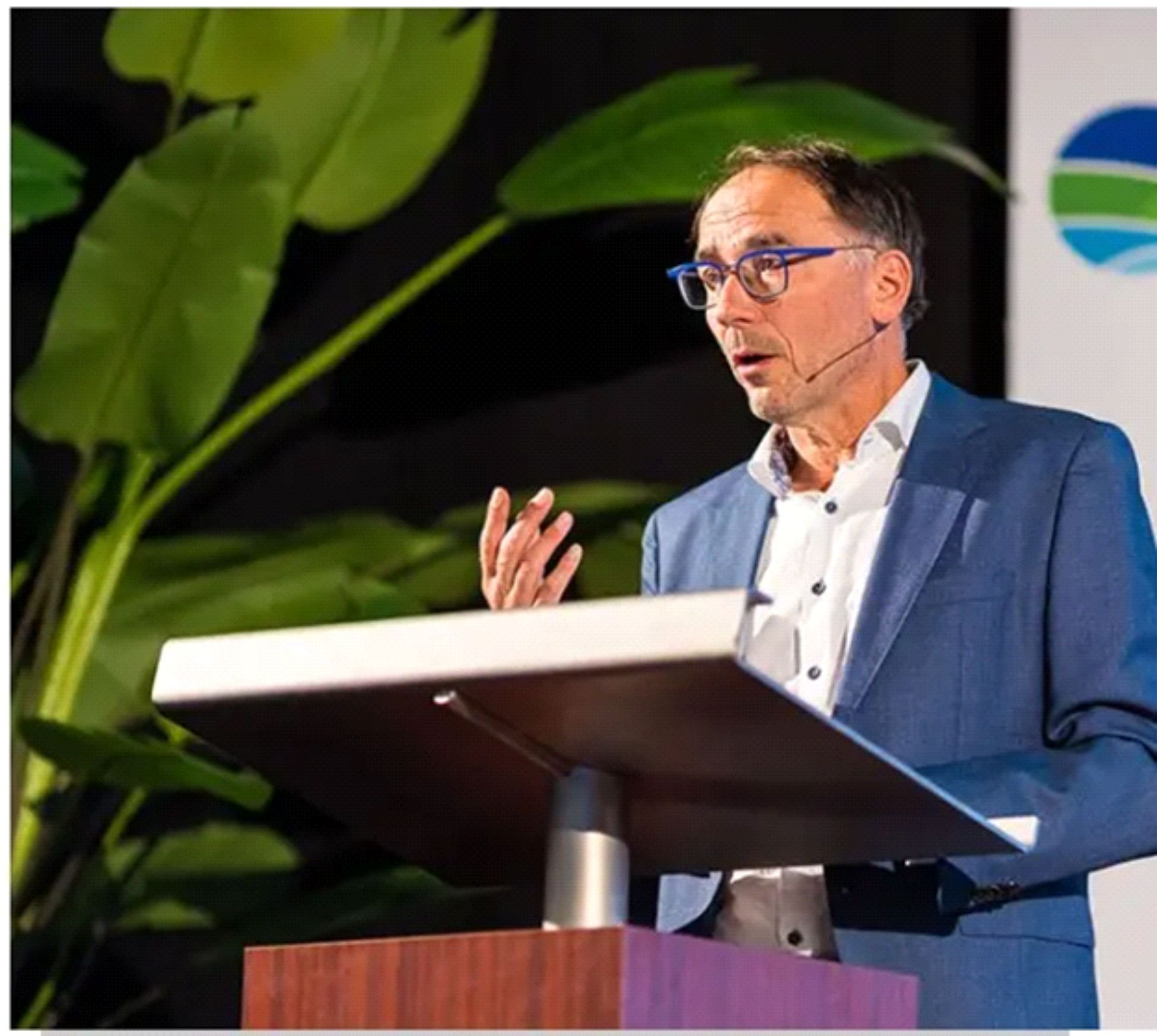
The program coordinator at the Netherlands Space Office and the G4AW program, Ruud Grim, during the event took time to meet with journalists.
One of his main tasks is to facilitate and stimulate the use of satellite-based information services for societal benefit areas, research and commercial businesses.
He is currently managing the Geodata for Agriculture and Water Facility (G4AW) in which 25 public-private partnerships (130 involved organizations) in 15 countries are developing advisory and financial services for millions of smallholder farmers and pastoralists in Africa and South-East Asia, all demand-driven and based on a business and financial model.
In this chat, he talks about the objective of the G4AW program to stimulate sustainable food production in developing countries using technology among other issues.
Here is an excerpt as presented by Jimoh Babatunde.
What does the G4AW program consist of and how useful is it for the African agricultural sector?
G4AW is an innovation program aimed to develop digital advisory services using satellite and weather data. It has supported 25 partnerships in 15 partner developing countries of the Netherlands in Africa with co-finance, networks and knowledge.
Each project has developed services that are useful for farmers or pastoralists. I can provide you with some examples from Africa:
In Burkina Faso and Mali, pastoralists can make a call to a call centre where they receive information on the best grazing grounds and market prices. Almost a million calls have been made today. The Garbal service is now being introduced in Niger.
In Uganda and Ethiopia farmers are insured against drought. More than 200,000 farmers have subscribed to the service. The insurance services are introduced in Senegal, Togo, Rwanda and Mozambique.
In Burundi, more than 200.000 farmers already are connected via lead farmers to the AgriCoach services. They receive amongst others weather information and forecasts, input advice (when and what to sow) and Good Agricultural Practices (GAP).
In more than half of our projects we see that weather information and forecasts are delivered and much appreciated.
Apart from the many experiences of the G4AW partners on the ground, can we say that the digitization of African agriculture is on track? add statistical data if possible
When we started the program in 2013 we concluded that in many countries the digital infrastructure is not yet in place for full two-day communication functionality.
GSMA, the association of mobile network providers, is keeping track of and reports on the progress. When we started we made an inventory of existing digital advisory services and concluded that many of them still were in the pilot phase and project funding.
The Digital Agri Hub is tracking them and has the statistics. The number of services has rapidly increased, although the increase over the last few years was not as big as the years before COVID.
The G4AW program allowed the design of digital services even when the digital infrastructure is not advanced yet. Their solution was to provide lead farmers with tablets on which many of the advisories are embedded.
With this approach, called G50, the GAP4A partnership intends to support two million farmers. They have plans for scaling to at least five other countries.
Altogether we observe that digitization in agriculture is advancing rapidly.
What do you do to support farmers to use the developed solutions for them when knowing that many are not used to digital?
In many of our projects, NGOs and extension officers introduce the services to the farmers and train them where necessary. The services are tailored to the local context and strive to use as much local language as possible and be affordable.
The NGOs have been involved in the development design of the first release of the services. They supported testing in the field and provide feedback from the farmers to the developers. In Southeast Asia where more 3G/4G mobile services are deployed a more direct two-way communication between developers/operators and farmers is rolled out.
What are the new technological trends towards which the creators of these solutions should move to better support the African agricultural sector?
Over the last decade, we have seen several new technologies emerging. Think about drones, machine learning, artificial intelligence, and blockchain. In pilot projects, these new technologies are being tested and integrated into solutions.
We have to wait a few years to see the real potential of these new technologies, but we certainly believe they become part of the complete spectrum of services.
And African service providers will take responsibility. In 2013 relatively few African service providers were operating. Now we see this emerging rapidly.
What is your assessment of all the efforts made by the various partners for the benefit of the African agricultural sector?
Over the last 8 years, the G4AW program has demonstrated that innovation by the 25 partnerships leads to concrete results. Not all partnerships were successful. With innovation, there will be failures as well. And the innovation was not only in the technological domain.
It was also in partnership and entrepreneurship, and business and revenue models. All the lessons learned are shared on our G4AW website so that everyone can benefit from them. This is all made possible by the more than 120 partners and their subcontractors that acted in the G4AW program.
What are the new orientations (perspectives) for the next few years for the G4AW and its partners? Eventually, how can other digital startups benefit from G4AW?
The Ministry of Foreign Affairs of the Netherlands has commissioned the G4AW program. In the latest policy notice, the Ministry mentioned “digitalization’ as a key technology to reach impact. At the opening day of the conference, the Ministry referred to the important results that G4AW has reached, and announced they will continue their support of programs like G4AW.
From the Netherlands Space Office perspective, we are committed to supporting and executing a follow-up to the G4AW programme.
Such as program can again include both innovation and scaling-up activities. For the latter, we see many opportunities in collaboration with ongoing development programs, and with large businesses in agriculture, telecommunications and finance. This will allow us to reach scale faster and make the underlying business model sustainable.