Food Security: FG Signs $158m Pact for Agriculture Financing Programme


Abuja, Nigeria – The Federal Government of Nigeria on Wednesday formalized a significant financing agreement for the Value Chain Programme in Northern Nigeria (VCN), marking a crucial step in its ongoing efforts to revolutionize the nation’s agriculture sector.
This impactful initiative is a collaborative effort, jointly funded by the International Fund for Agricultural Development (IFAD), the French Development Agency (AFD), and the Government of Nigeria.
During the signing ceremony for the VCN project held at the Presidential Villa in Abuja, Vice-President Kashim Shettima eloquently described the initiative as the result of careful consideration of the economic realities prevalent in the northern region. He stated that it embodies the fulfillment of President Bola Tinubu’s administration’s promise to alleviate poverty across Nigeria, restore dignity to the nation’s farmers, and ensure comprehensive food security.
“It is a declaration of faith in the North—not as a region of deficits, but as a place of abundance,” Vice-President Shettima affirmed. “It also invites us to play our part in fulfilling the promise to reduce poverty, nourish our people, and restore dignity to farming families across Bauchi, Borno, Jigawa, Katsina, Kebbi, Sokoto, Kano, Yobe, and Zamfara. The gathering today signifies an investment of $158.15 million, co-financed by the International Fund for Agricultural Development (IFAD), the Agence Française de Développement (AFD), the Federal Government of Nigeria, and other vital stakeholders. This underscores President Bola Ahmed Tinubu’s unwavering commitment to prioritizing the most critical aspects—people, productivity, and prosperity.”
Vice-President Shettima recalled the recent commencement of foundation laying for the construction of Special Agro-Industrial Processing Zones (SAPZs) across Nigeria by the Tinubu administration. He explained that the VCN programme is strategically designed to seamlessly integrate with these SAPZs, providing a consistent and reliable supply of raw materials, thereby ensuring that processors no longer struggle to find quality inputs.
“This synergy will shift us from exporting raw produce to exporting value-added goods—creating jobs, wealth, and industrial stability,” he added.
Drawing attention to the recent global trade disruptions and the resurgence of protectionist policies, Vice-President Shettima emphasized the urgent need for Nigeria to prioritize domestic food production and enhance its capacity for agricultural trade. He pointed out that the agricultural tariffs and retaliatory measures adopted by major global powers serve as a clear warning for Nigeria to become more self-reliant in food production.
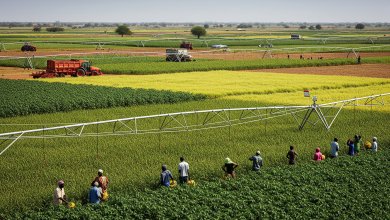
“For a nation that has long relied on food imports, the message is clear: we must grow what we eat and produce what we trade. The VCN directly addresses this imperative by making the commercial cultivation of wheat, maize, and animal feed viable, coupled with strategic investments in irrigation, processing, and storage facilities in key states like Kebbi and Jigawa.”
He further underscored the transformative potential of the programme, asserting, “We are not just securing food—we are laying the groundwork for agricultural exports that can rival our oil.”
A particularly noteworthy aspect of the VCN programme is its explicit focus on reaching underserved populations, including women, youth, persons with disabilities, and returnees. Vice-President Shettima highlighted the programme’s recognition of the intrinsic link between peace and prosperity, especially in communities scarred by conflict, where agriculture serves not merely as a source of livelihood but also as a crucial pathway to rehabilitation. He also assured that the federal government will deploy digital tools to meticulously track every stage of the process, from farmer registration to market access, input distribution, and yield analysis.
“In regions where migration and insecurity are fuelled by joblessness, the VCN provides tangible vehicles for enterprise, income generation, and the restoration of dignity,” he affirmed.
Earlier in the proceedings, former Senate President, Sen. Ahmed Lawan, lauded IFAD, the Federal Government, and other collaborating partners for their visionary conception of the programme. He described it as a meticulously planned initiative with the potential to significantly transform the lives and livelihoods of numerous individuals within the targeted states and beyond, pledging the unwavering commitment and support of the National Assembly for the effective implementation of its various components.
The Minister of Agriculture and Food Security, Sen. Abubakar Kyari, emphasized that the signing of the financing agreement represents a pivotal milestone in the ongoing efforts to reshape Nigeria’s agricultural landscape. He highlighted that the active participation of the nine states and the presence of other critical stakeholders underscore the shared commitment of both the sub-national and federal governments in fostering inclusive agricultural development. The Minister expressed strong confidence that the VCN will deliver impactful programmes and projects that will demonstrably improve agricultural productivity and the overall well-being of small-holder farmers, farmer groups, and women across the region.
On his part, Governor Dikko Radda of Katsina State commended the exemplary leadership provided by President Tinubu and Vice-President Shettima in the implementation of the VCN programme and other vital schemes across northern Nigeria. Similarly, Governor Umar Namadi of Jigawa State pledged his unwavering commitment and support towards the actualization of the objectives embedded within the programme’s various components. He also urged the implementing agencies to carefully review the design and timeline for implementation to ensure that participating states can maximize the intended benefits.
The Country Director of IFAD, Mrs. Dede Ekoue, provided further details about the $158.15 million project, stating that it is strategically designed to bring about a significant transformation in agribusiness across nine northern states. She elaborated that targeted interventions under the programme will prioritize climate-smart agriculture, the adoption of innovative technologies, improvements in post-harvest handling, and value chain addition. Mrs. Ekoue projected that these interventions would lead to the creation of over 30,000 jobs and entrepreneurial opportunities specifically for youths, women, and other vulnerable groups.
The high point of the significant occasion was the formal signing of the agreement for the Joint Roadmap for Accelerated Start-up between the Federal Government of Nigeria and IFAD. (NAN)