Agricultural Enterprise Calls for Renewed Federal Government Emphasis on Sector’s Pivotal Role

A significant voice within Nigeria’s agricultural business community has recently articulated a compelling case for the Federal Government to elevate its prioritization of the agricultural sector. The prominent firm, in a formal statement released to the press and public, underscored the sector’s latent capacity to serve as a primary catalyst for comprehensive national advancement, citing its potential for robust economic expansion, large-scale employment generation across diverse value chains, and the crucial imperative of ensuring sustained food security for the nation’s expanding populace. This advocacy emerges against a backdrop of ongoing national discourse concerning the diversification of Nigeria’s economic foundation and the recognized necessity to lessen reliance on traditional revenue streams.
The agricultural enterprise’s appeal meticulously detailed several critical domains demanding heightened governmental attention and strategic intervention. Paramount among these was the urgent requirement for substantial and targeted investments aimed at the modernization of agricultural practices nationwide. This includes facilitating access to affordable financing and credit facilities specifically designed for smallholder farmers, who constitute a significant portion of Nigeria’s agricultural workforce. Furthermore, the firm emphasized the critical need for sustained support for agricultural research and development initiatives that are directly relevant to Nigeria’s diverse ecological zones and the specific challenges faced by local farmers.
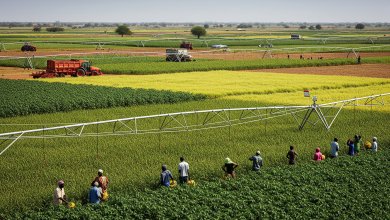
The statement also highlighted the strategic importance of developing and maintaining essential infrastructure, such as efficient irrigation systems to mitigate reliance on rain-fed agriculture, modern storage facilities to reduce the pervasive issue of post-harvest losses, and well-maintained transportation networks to ensure seamless market access for agricultural produce. Beyond direct investment and infrastructure, the agricultural firm passionately advocated for the implementation of enabling policy frameworks that would foster a more attractive environment for agricultural entrepreneurship, encourage greater private sector participation across the entire agricultural value chain – from primary production to processing and distribution – and proactively address the persistent challenges posed by insecurity in farming regions and the increasing impacts of climate change on agricultural productivity. This concerted call to action reflects a growing sentiment within Nigeria’s agricultural community, recognizing the transformative power of a strategically prioritized and well-supported agricultural sector not only to meet the nation’s immediate food needs and create widespread economic opportunities but also to position Nigeria as a significant and competitive player in the global agricultural marketplace, thereby bolstering its foreign exchange earnings and overall national economic resilience in an increasingly interconnected world.