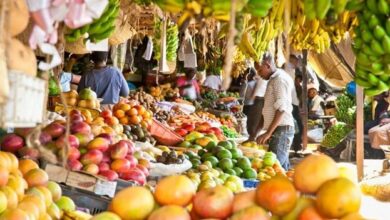
As the world is still grappling with the spike in the market prices for major food commodities due to the Russia-Ukraine war, Nigeria faces several threats to its already precarious food security.
Since over 50% of the foods consumed by Nigerian households come from purchased sources, food price inflation threatens to place many people in a worsening food insecurity situation.
Nigeria is a huge consumer and importer of wheat products. According to the Central Bank of Nigeria (CBN), wheat is the third most-consumed grain in Nigeria after maize and rice, with domestic production accounting for only 1% of the 5 to 6 million metric tons of wheat consumed annually.
Nigeria’s dependence on wheat imports may lead to high prices, and supply problems. This is already becoming evident from the threat by bakers to increase the prices of bread and other bakeries by 30%, citing higher raw material costs.
Though the development has been attributed to incessant increases in prices of baking materials, which has made it difficult for the bakers to break even, there are fears that the new development will further aggravate the hardship in the country, especially for lovers of breads
According to reports, due to the skyrocketing price of foodstuffs, especially rice, yam, beans, garri and other staple foods, the majority of Nigerians have found solace in bread, which is not only a cheaper alternative but can be consumed at any time.
But Nigerians might have to pay more for a loaf of bread as bakers have threatened to increase the price of bread in the country.
The President, Premium Bakers Association of Nigeria, Emmanuel Onuorah, who made the disclosure recently on TVC Business Nigeria, blamed the development on the country’s poor business environment.
Depending on the size, the price of bread hovers between N500 and N800 per loaf.
He said, “We have not even increased the cost of our bread commensurate with the increase in the cost of materials, because for you to be able to run the business, cost and revenue must match each other.
“In our instance, the cost has overshot revenue. If you buy a six hundred trailer of flour to use in your company, most of us, by the time we finish baking, our revenue will be enough to pay for only four hundred. You will have a shortfall of two hundred.
“Now we just did a marginal increase after negotiating with our stakeholders, the distributors. We haven’t even finished the negotiation and the price of flour has risen by N1,500.”
“And for every N1,000 increase in the price of flour, it is N10 shelve off from our margin. We are running at a serious loss. We just did one yesterday, I don’t even know what next week is going to tell.”
“I’m very certain before two weeks; we are going to do another price increase again. Ordinarily, we are supposed to increase bread price by N250 – that is the jumbo size, then the small size (slice bread) we are supposed to increase by about N150 so that we will be able to break even.”
Bread makers are lamenting that the ingredients for the production of bread have seen an alarming surge over the last three months.
According to him, milk price has risen from N72,000 to N80,000 between February 10, 2022, to April 25, 2022, while flour rose from N19,000 per bag to N24,500 during the same period.
Sugar has also risen from N20,500 to N25,000, while the flavour is currently at N8,000, up from the N6,500 sold on February 10 this year.
He lamented that diesel prices rose from N350 to around N700 per litre thereby increasing the production cost.
Onuarah said, “Salt increased by N1,000, yeast increased by N3,000 and as I was stepping in here today again, yeast has increased by another N600. I just got the alert now. The company just informed me.
“Preservatives increased by N7,000, margarine increased by N6,500, soya beans increased by a whopping N4,400. An egg that we used to buy for N800 is now N2,200. What business can survive this kind of continuous increase in prices?
“Before now you never looked at diesel cost as something so paramount, but diesel cost today has doubled.”
He said the bread baking business is volume-driven adding, “we have just done a N100 (price increase). We are running on a N188 (shortfall), so we have a negative N88.”
The Association President also lamented the import duty on wheat, saying “the government must do something to ameliorate the impact of this import duty on the millers.” Onuorah said they are charged 30 percent on wheat imports.
He added, “Some other climes in Africa, because of the Covid and the tension in Europe occasioned by the Russia-Ukraine crisis, they froze import duty on wheat.
“But here, they still charge 30 percent. I’m calling on the federal government to look at that 30 percent now. As an interim measure, have a moratorium, maybe in the next year. It is only the living that you can govern.”
This position was collaborated by a Miller, who said that the import duty slammed by the Federal Government on imported wheat flour has escalated the prices of flour-based commodities.
As a result of this, flour millers, bakery firms and other businesses that depend on imported wheat flour as their raw material have been reeling under the high cost of their raw materials.
An investigation has shown that noodles, biscuits, bread and other confectionery bakers are not finding it easy due to the cost of wheat flour which they say has skyrocketed in recent months.
“The hike is causing low patronage as customers are not willing to buy due to the development,” said Mama Chidera who operates a retail shop at Awodi-ora market, Ajegunle, Apapa, Lagos.
“Before the price increase, if you go to the market with about N200,000, you can buy enough goods as you want, but now that price has increased, when you go to the market with N200, 000, you will not see the worth of that money,” she said.
On biscuits, she said; “Before, when I go to the market, I buy varieties of biscuits, but because of the increase, some producers have ceased producing biscuits; and companies that are still producing, produce less. So, instead of buying as many varieties as I wanted, I buy the available ones.”
Similarly, Caroline Agyo, who bakes cakes, puff-puff, fish-roll, and buns, among other snacks, said that she has stopped baking.
“I can’t cope with the price increase and rather than lose capital base and profit, I had better look for something else to do.”
A noodle retailer said; “We are facing so many challenges. If the price can be reduced, we will appreciate it. If the price of flour comes down, then you can buy the quantity you want and prices of flour-based food items will come down. For instance, the price of noodles per carton has increased for different brands.
Manufacturers and importers are, therefore, seeking the Federal Government’s intervention on import
duty valuation of some critical raw materials as they believe that customs have been overstretching
them by basing duty valuation on spot price in place of the transaction value of the commodity.
According to them, the Customs is using an arbitrary approach to arriving at the duty value, which is
taking the current Spot prices as a benchmark. They complained that the service was not taking into
consideration that the manufacturers may have secured goods at discounted or long business
relationship value.
A source, who would not want his name on print, remarked: “Obviously, using the consumer price index to fix duty is not realistic. The source argued that it was not helpful for the Customs to use the
Consumer Price Index (CPI) to compute value and charge duty, given the high cost of local production.
The source noted that the CPI has frequently drawn criticism that it has overstated inflation.
It was gathered that the impact of this practice is mostly felt by the food sector and considering how
critical food is to the nation and its population, something needs to be done about this and quickly too.
This practice by customs, the source noted, was aiding inflation and threatening the stability of the
country’s agro-allied industry.
According to them, internationally, Customs are mandated to base their duty valuation on the
transaction value of the imported raw material as stated on the invoice presented by the importer.
The manufacturers maintained that the World Trade Organization supports harmonised duty valuation
underpinned by facts and evidence and anything outside that amounts to illegality.
Speaking on the issue, the National President of the National Council of Managing Directors of Licensed Customs Agents (NCMDLCA), Lucky Amiwero, said what the Nigeria Custom is doing amounts to illegality.
He said whatever the custom does should conform to the WTO agreement on customs valuation, which aims for a fair, uniform and neutral system for the valuation of goods for customs purposes.
He said the agreement which was domesticated in Nigeria in 2003 as Act 20, 2003 conforms to commercial realities and outlaws the use of arbitrary or fictitious customs values.
Amiwero said based on the domesticated agreement, the Custom has no power to base their duty evaluation on CPI.
He regretted that the arbitrary evaluation is a principle against the world as what the Nigeria Custom does is Artificial Intelligence which is not known to the law.
Amiwero noted that there are six methods of valuations , transaction value, , identical goods method, similar goods method, deductive value methods , computed value method and the residual basis of valuation methods.
He said evaluation of imported goods needs to be sequential as there are criteria to be met, adding that “the sequence of deductive value and computed value methods can only be switched at the request of the importer and not at the discretion of the customs officer.”
The National Council of Managing Directors of Licensed Customs Agents’ President the application of CPI by the custom has led many importers to abandon their cargoes at the port and that those who manage to clear their goods often pass the burden to the final consumers.
“ What this means is that the imported commodity will cost more and the manufacturer will pass the extra cost to the consumers,” Amiwero noted.
A feed miller, who does not want his name in print, added that basing duty on CPI drives up the cost of importation into the country, with its contributory infractions to the ailing economic hardship in the land, worsening inflation, and weakening consumer purchasing power.
He argued that this has had consequences on Nigerians since importers will introduce higher prices to recoup their investments.
He also argued that the practice throws to the wind professionalism and expectations of the valuation officers whose responsibility is to calculate duties based on the value of the goods before them.