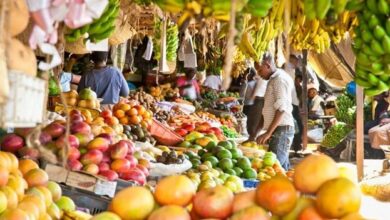
CASHEW APPLE JUICE IS BELIEVED TO BE RICH IN VITAMIN C, AND CAROTENOIDS, IS USED AS A REMEDY TO TREAT SORE THROAT AND CHRONIC DYSENTERY

It is the season for harvesting of cashew fruits in Nigeria and many farmers have already commenced the process of sun-drying and bagging harvested nuts for export.
Botanically referred to as Anarcadium occidentale, cashew is an evergreen tropical shrub or tree that bears both an apple-shaped fruit (cashew apple or cashew fruit) and the “cashew nut” attached at the fleshy fruit base.
However, despite the huge economic importance cashew fruit commands, much of it is wasted on the farm annually as farmers are mostly concerned about the nuts which are mostly exported to Brazil or India.
“We usually allow the cashew apple (fleshy fruits) to get rotten on the farm because we do not know what they are used for,” Taye Omoyajowo, a cashew farmer at Rabsih IMEC Nigeria Limited in Iwo, Osun State, said?
He said: “The cashew apple is of no use to them because nobody has come for them since I have been working on this farm. We detach the nuts from them and allow the fruits to rot on the farm.”
According to a research report, nutritionally, cashew apple juice is believed to be rich in vitamin C, carotenoids, and phenolic compounds, traditionally (in Brazil) the fruit juice is used as a remedy to treat sore throat and chronic dysentery.
“We harvest cashew fruits three times in a year. Since we started harvesting in January, it will continue until the fifth month (May) of this year before we can stop,” he said.
He said fruits coming out from cashew trees after the fifth month of the year do go to waste due to excessive rainfall.
“We are majorly interested in the nut, we gather, dry them and sell them out when prices are high,” he said.
Seen spreading (sun drying) harvested cashew nut on the floor, a cashew farmer who identified herself as Simbiatu (Iya Solia), explained that they usually sun-dry the nuts for four days before bagging them for storage after harvest.
“We just started harvesting it, we are expecting more harvest in the third month of the year,” she said.
In Nigeria, cashew is mostly grown in Enugu, Abia, Imo, Anambra, Ebonyi and Cross River States in the eastern and southern part of Nigeria.
Oyo, Osun, Ondo, Ekiti and Ogun States are the top producers of cashew in the western part of Nigeria, while Kwara, Kogi, Nassarawa, Benue, Taraba, Niger, Federal Capital Territory (Abuja), Kaduna and Plateau states are the top growers in the Middle Belt.
However, the majority of quality cashew nuts currently being exported from the country come from the Western and Eastern parts of the country.
Between 2010 and 2019, Nigeria’s cashew production averaged 255,416 tonnes annually, according to the Food and Agricultural Organisation (FAO).
ⓘ Nigeria’s cashew output declined from 2010 to 2015 when the country recorded an output of 97,149 tonnes. Production rose to 98,291 tonnes in 2016 and 100,000 tonnes in 2017, before the country’s output stabilised at 100,000 tonnes, with Nigeria currently the sixth largest producers of the commodity in the world